
171.4K
Downloads
171
Episodes
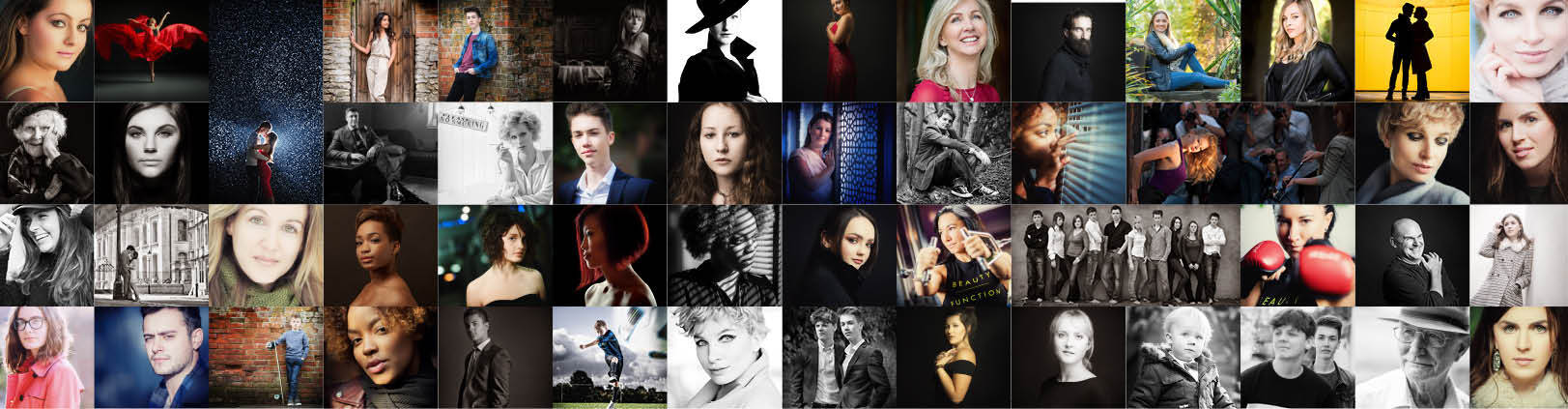
Tales, techniques, tricks and tantrums from one of the UK’s top portrait photographers. Never just about photography but always about things that excite - or annoy - me as a full-time professional photographer, from histograms to history, from apertures to apathy, or motivation to megapixels. Essentially, anything and everything about the art, creativity and business of portrait photography. With some off-the-wall interviews thrown in for good measure!
Episodes

Wednesday Feb 04, 2026
Wednesday Feb 04, 2026
I’m back after a bit of a stop-start spell with the podcast, and I’m talking honestly about headspace, mojo, and how hard it can be to create when you’re just not feeling it. The main point I wanted to cover is this: there’s more than one way to do things in photography, and the “that’s wrong” comments (especially online) completely miss the point. I’m sharing why I try to frame everything as my way, not the way, and how clients, time, kit, and real-world constraints always shape what works.
I also give you a quick update on upcoming workshops, where to find the new short-form video content, and what I’ll be covering next after a couple of judging days.
Key links
Workshops mentioned
- Mastering Dogs With Their Owners workshop (9 Feb 2026)
- Mastering Advanced Studio Lighting (16 Mar 2026)
- Mastering Portrait Photography Bootcamp (11–12 May 2026)
Transcript
[00:00:00] So hello one and all. This is the Mastering Portrait Photography podcast, which hasn't, hasn't been the most frequent in the past few months, one reason or another. Um, I just haven't managed to find either the time or if I'm more honest, I guess the headspace, the difficulty with doing anything creative is that if you don't feel it, if you're not right into it, and you know this as photographers, it's really hard to do it. And every time I've sat down, it's just been incredibly difficult to find, I suppose the words, I'm not sure that last year was the greatest year on earth. We got there, we grafted, but we got there, um, massively busy year, but I don't know if the positivity that we've had over the past years was quite, quite the same.
And so in that context, it's been quite hard, I think. To, uh, be a photographer, to be a portrait [00:01:00] photographer, and also to record this podcast. So when I talk to people and they say they're not feeling it, I totally understand. Somebody in a workshop the other day, we always, at the beginning of every workshop we run here, we ask the people on it what they'd like to get out of it.
And I think on every single one last year, and certainly the one we ran a couple of weeks ago, there is someone who will simply say. I've lost my mojo. What an interesting line given I think I've been feeling the same way about the podcast. Not that I haven't wanted to do it. I love doing it. I love sitting here and chatting.
It's sort of like having my own personal counselor, you, but I just haven't really found the energy and the headspace, um, to do it. And for a million reasons, some of it to do with just the mood, the news. Politics, the weather. Um, and then just to compound everything over Christmas, I completely lost my voice [00:02:00] and I do mean, completely caused a lot of hilarity amongst my family and my team.
But I had to do a couple of workshops at the convention. And they were quite squeaky. I literally sounded like squeaky from the toy story. Anyway, you'd be pleased to hear it's all back. It's all firing on all cylinders. 2026 is a new year. I'd like to say it's the start of a new year, but given it's February, I'm not even certain.
I can say Happy New Year to all of you, but here we are. I'm Paul, and this is the return of the Mastering Portrait Photography podcast.
So, hello one and all. I hope you're well. I hope the weather, I dunno what the weather's like all around the world. Of course I don't. But right here, right now in this bit of the world, it is miserable. We had to drive a Land Rover over to get, um, to. I think it's called an eyebrow repaired an odd, an odd phrase, but it's the bit of the wing that pro [00:03:00] protrudes over the wheel on the front, front driver's side.
Because the other day as I was about to head out and do a job for the hearing dogs and with my client, my client's climbing into the car next to me and somebody decided the gap between my front driver's side wing and the wall next to him was sufficient to get a very big Mercedes-Benz through it. It turns out it wasn't.
And the only damage, sadly for me was that it put a, put a hole in the, uh, wheel arch. It's called an eyebrow, this thing. So anyway, today we must have, find someone to get it repaired. The guy's paid, it's fine. It'll all get fixed. Um, so, uh, drove over, but the weather. The weather was horrific, and it's cold and it's gray and there's just water everywhere.
It's a miserable state of affairs and trying to, trying to be a portrait photographer in this. I'm glad we have a warm studio that I will say. Uh, so here we are. [00:04:00] Here we are. It is, what time is it? It's, uh, 10 past eight on a Tuesday evening. I'm still in the studio and this time. I am recording video for it Now.
I don't know whether you'll see the video. This is the first time I've tried to do, what do they call it, A visualized podcast? I'm not sure. It's a video podcast. That would be, um, over egging it a little bit. It's me staring at one very small camera that I dug outta a drawer. To see if I can get this to work.
If it works, then we'll throw something a little bit more sophisticated at it. But in our team at the moment, in the mastering portrait photography team, we have Katie, I've introduced you to Katie before. That's not news. But one of the things we have been doing is recording more and more and more and more content, mostly short reels, short videos of one sort or another.
And it's, I mean, it's a huge amount of fun. I'm having a blast. I come in on a Monday and Katie will tell me the topics we're going to cover, uh, and we get on with it and we film small [00:05:00] videos of one form or another. Um, and it's, I'll be honest, I'm loving it because it gets, it gives us a chance to talk about this business die love.
Um, however, some of the things that have popped up through that are that really the podcast also now needs to be on video. Here I am and if you take a look around me, if you are looking at this on the video and take a look around me, you can see that it's the first foray. 'cause even if, as I look around the screen here that I'm, I've got feeding information back to me, it does look like my desk has been burgled.
It is pretty bad at the moment. There is stuff everywhere. Uh, which isn't great, but I will get that fixed and get it sorted. So it looks a little bit prettier. I'm not sure this is the right camera, uh, for this particular job, but, uh, if it works, like I said, we might just upgrade. Um, but off the back of these videos, this is the topic I wanted to talk about today.
This is only gonna be a short podcast, uh, partly 'cause I am starving. I've been here all [00:06:00] day. I've had one banana, one sandwich, one pair. Um, and I really, really, really want to go and do a little bit of exercise, um, and maybe have some food. So this is gonna be a shorter podcast than perhaps you're used to.
However, this is what I wanted to cover. I wanted to sort of cover a point that has arisen through doing these little reels and videos with Katie that there is definitely more than one way of doing things. Now I'm doing this unscripted. I've got my pen to make some notes in case I kind of lose track. Um, so forgive me if I ramble, but.
There's more than one way of doing things in. When we do a workshop or I do a presentation, I will always, or nearly always put up a slide that simply has two words, opinion overload, and I put it up there to remind me, to remind the people watching me that just because I say this is a way of doing [00:07:00] it doesn't mean it's the.
Way of doing it. It's just the way that I found works for me on the whole, sometimes it'll be two or three different ways I've discovered will work and I'll point out which one seems to give me the most consistent results, or is the least expensive in time and materials, or is just simply the, you know, the one I enjoy the most.
Because if you, if you are attending workshops, if you are going through the process of learning, and we all do this every time the person in front of you says, this is how to do it, there's a tendency for us to believe them. There's a tendency for us to, in our head say, right, that's what we're gonna do.
Their photography is what I like. That's how we're gonna do it. And that can't possibly. Be the case. There are too many different styles, too many different photographers for that to be the case, and so I try to remind people, this is just my opinion at this [00:08:00] moment in time. This is how I do it, or this is how I have done it tomorrow.
It may well be different next year. It's highly likely to be different changes in technology. In equipment, in approaches in clients, your client drives an awful lot of this too. Remember, you know, if your client's demanding that you travel light, then you travel light. And so some of the techniques for lighting, for instance, won't be, uh, quite the same as if you have all the time in the world and a studio.
There's always a way of doing something that works for you, and there are plenty of other ways that maybe don't work so well. And the point is, we've learned this through the reels and videos that we've been posting, but all too often I'll put something up and somebody will tell me quite, quite vigorously, that's not right.
Whether it's clamshell, just use a reflector. You don't need two lights, whether it's white balance adjustments, differential white balance. I'll just do it all in night room in post, whether it's, and my favorite comment was, [00:09:00] you are three times my age. Maybe that's right for you, which I thought was entertaining, if nothing else, and these are all valid by the way, I'm not worried about it. It just struck me that people seem to think that there is just one way of doing something. And of course there isn't, there's not one technique, there's not one aesthetic. If, if we all liked the same thing, if we all liked the same output, if we all liked the same processes, life would be, frankly, frigging dull because there'd be nothing interesting every, and I use the musician, I know I use the musician musician's analogy a lot, but if you think about the number of different ways that you've heard a composer or different composers say they write music, some will sit at a piano, some will write the lyrics, some will hum it, some will record it.
Some people just have their phone to their bed and record a quick snippet of vocal or whatever it might [00:10:00] be. Everyone has a different way of doing it, and yet no one seemingly anyway, no one in that world criticizes another songwriter and tells them that that's how they should do it. They should do it differently, but somehow in photography, that's okay.
Or maybe it's not that it's in photography. Maybe it's just that the medium of imagery, the medium video, lends itself to social media, in which case it lends itself to people writing comments. And so I just thought I'd explain whenever I go through something. I mean, I'd love you to have a look at some of the reels and things we're posting.
I'll, I'll give you the details of where they can be found at the end, um, and see what you think. But I try really hard. To make it an open conversation. It's about, here's a way of doing it. Here's an explanation of what's going on. Here's why I like it. I mean, I think that's fair. It doesn't mean I don't have things that I like, but I do try really hard not to say this is a defacto [00:11:00] thing.
Technique, method route. You shouldn't, you don't have to have this equipment, you don't have to have, um, this way of doing things, you know, light meters. Another one, people are very enthusiastic about light meters, tripods, gotta have a tripod, gotta have a light meter. Um, two things that actually, I, I own plenty of them.
Um, just doesn't work particularly, or it does work for me. Of course it works and that's wrong. Saying it doesn't work for me, that's not true. It's just that not using a tripod and not using a light light meter works better for me in most circumstances. There are days when actually a tripod is really useful.
Long exposures stop frames when I just want that pin sharp thing you can get when your camera is bolted to a good sturdy tripod or a light meter. When I'm running lots of different light sources and I just need to run around the room, checking that everything's balanced. Yeah, line meter is brilliant for that.[00:12:00]
But most of the time I just like the freedom. I like the pace, I like the fluidity of working without either of those things. Am I wrong? Well, to some people, clearly, but it doesn't feel wrong to me. It feels totally right to me. Do I think that people that use a tripod or like me are wrong? No, not at all.
Um, I can give you my reasons why. I find it easier without, I find the speed of it without, I find the availability and the fact that I can just drag a camera out and get on with it. I find that appealing, and so my point is that as fast as I'm trying really hard to provide information, provide insight into one photographer's way of doing things.
I think it's important to note that there's always more ways, um, of achieving an end result. Um, and I will try in the videos, actually, I'm gonna try in the coming months to do things in different ways. Things that I maybe I wouldn't normally do to illustrate my own point. Maybe [00:13:00] I will use a tripod to nail the sharpness.
Maybe I will use a light meter. Um, to show how that works. Maybe I will just do, I'll listen to the comments coming back and I will try some of these routes. Maybe I'll do differential white balance in Lightroom and Photoshop rather than using actual lights. And all of these things are doable and it'll be a huge amount of fun, actually.
'cause I love, I love the idea that there's a million ways of, um, creating things because the more ways you learn, the more holes you can get out of. And we've all been there, right? We've all been in a shoot. Where chaos ensues or there's no time, or the weather doesn't play ball or the client or the location, or it doesn't matter, whatever it is, that just is causing you a headache.
And so the more techniques you have at your fingertips, the better. And that's if there is one way of doing things. If there is a case where there's one way of doing it, there's the one thing I would say you should definitely do is learn lots of different ways [00:14:00] to do things. So I will try. Um, on that note, I said this is gonna be a short podcast.
It just occurred to me today that I would have a quick, um, chat about that and also test whether doing this straight to video is gonna work, in which case we can move to some, uh, maybe some longer topics and some interviews. Uh, so some updates on where we are with everything else. It has been a busy start to the year.
Lots of different things going on. Uh, workshops. Sarah's asked me to mention the workshops that we have, uh, in the diary at the moment. So I've got one next Monday actually, where we have a space left. It's dogs and their owners, I should say, photographing dogs and their owners. Uh, which is all about it's dog photography, but because I'm a portrait photographer, it's as important to me that we photograph the dogs with the people that bring them, their owners, their loved ones, all those kinds of things.
Um, and so it's a day's workshop, uh, February the ninth, um, here at our studio, uh, on March the [00:15:00] 16th. And this might. Be my favorite single workshop to run. It's Advanced Studio Lighting and I love it because people just rock up with ideas and we play, we play all day. Uh, the one we did a couple weeks ago was off-camera flash, and that was a huge amount of fun too because people just ask us to try things.
And I love that. I love the idea that, um, we have a maximum of five delegates on these workshops, and that's deliberate. It gives us a chance to chat. It, it gives us a chance to talk our way through things. Uh, so the off-camera flash, uh, day was just brilliant. And the advanced Studio lighting, which is on March the 16th, um, is fun.
Uh, for the same kinds of reasons, five people and me and a model or two just playing, just trying stuff and seeing what happens based on experience. And for me as a, um, as the person running the workshop. I love it when people come with ideas too, because. Quite often it pushes what we do here [00:16:00] at the studio a little bit further.
We try new things and it's great. And I mean, the other thing of course is I'm an crom ambassador, so I get to play with all of this kit, um, that I so love using. So that's March the 16th. Now, may the 11th and May the 12th. This is a two day bootcamp. Uh, there's a space, I think there's one space left. Um, we didn't know last year when we ran the first one quite what this would be like.
Um, we had to change tack a little bit, so we had a hall booked. Um, rather than do it here at our studio, uh, we had a hall booked at, um, a local hall. Um, and for one reason or another on the day before the bootcamp workshop, it just wasn't gonna happen for a million reasons at their end, not ours. And, and it just.
We decided in the end to sidestep it and run everything here. We reworked the studio, we changed the way we were gonna do things literally overnight. We're not, I'm not joking now, that's overnight. [00:17:00] Um, and it worked really well because everything's to hand. So anything that someone asks, we can try again.
Very limited number of people. Um, so it's not too busy. And that's a two day bootcamp. Um, and the other thing we did is at the end of the first day, we said if anyone fan sticking around in the evening and having a pizza and, and a beer, then you're very welcome to. It wasn't really part of the planned workshop as such.
It was just rather than everyone scattering to their bread and breakfasts and hotels and things. Why don't, if you want to, why didn't stick around? Everybody stuck around. Um, and so actually we dragged lights out into the garden. We did different things. We tried different things. We had really nice food and a beer and laughed away, uh, into the we hours.
It was brilliant and picked up the next day. So March, uh, sorry, may the 11th, may the 12th, two day boot camp. If you fancy it. Um, so those are the things. What have I got left for this week? Oh, right. I said, I'd say where the reels and things are. So we are publishing reels at the moment. Lots of short snippets alongside our long form stuff on, uh, you can head to [00:18:00] YouTube.
Instagram is mastering portrait photography. That's um. Our ID for that. Um, and TikTok as well. Um, TikTok is a whole new thing, uh, for us. I feel about four times the age of the people on there. Uh, but Katie, who's in charge of all the seeing, who's, uh, much younger than us, um, assures us it's a good idea. So we're also putting content up onto there and get some really interesting conversations.
Um, we're also putting all of those reels up on our mastering portrait photography.com website in a reel section. Um, still uploading those, still tuning them. So if you want to go to a single place. Uh, if you are not a social media freak, um, you can go up there and all of the little short reels will be on there with various links out to long form, uh, content that you have to be a member for, for the long form.
But the reels, the short form, uh, will be on there. Uh, what else, latest? Oh, this week is judging. Um, I do, I think I'm due to give a quick update [00:19:00] on the judging I did at The Convention in London. As ever, when I do a judging. Um, a whole process of judging or a couple of days of judging. I normally come back with some things I've learned, but this time, because I'm going into The Guild judging, I'm chairing the guild judging, I thought I'd combine the two and go through my notes from.
Both sessions. Uh, to be honest, I'm beginning to sound like a broken record. It's the same things you know. Don't blow your highlights. Don't block your blacks. Clean your sensor. Learn how to print. And for goodness sake, mount your finished work beautifully because it counts. If it's a print competition, make sure your work arrives immaculate.
Um. So there you go. Those are some of the things I learned. Um, but I'll cover it properly when I've been through judging for the Guild, um, later this week, and I think that is everything. If not, um, Sarah will kill me or kick me or both. Um, if you have any questions at all, you can always reach me. And if you fancy, just browsing a ton of stuff, [00:20:00] lighting, diagrams, um, guides, videos, uh, the, um, frame previews that we can, you can download to visualize, uh, your, how your images will look on a wall. Then it's all on mastering portrait photography.com, which is also, as it happens, the spiritual home of this particular podcast and whatever else you're doing on this, really quite miserable Tuesday night before I go home and climb onto the Peloton bike to do some exercise. Please, whatever you do, be kind to yourself. Take care.
No comments yet. Be the first to say something!